

The cult fashion documentary that exposed the reality of modelling
More than four decades on, Frederick Wiseman’s Model still feels startlingly current in its portrait of fashion as a system that turns people into images.
By Claire Marie Healy
MUBI is offering our student readers 60 days free to watch Frederick Wiseman’s Model: mubi.com/1granary. And don’t worry, if you’ve already graduated, you can start with one month free, see here.
Editor’s note: Alongside Claire Marie Healy’s essay on Frederick Wiseman’s Model, 1 Granary spoke to models, casting directors and agents about what the film still gets right about the realities of modelling. Read their thoughts here.
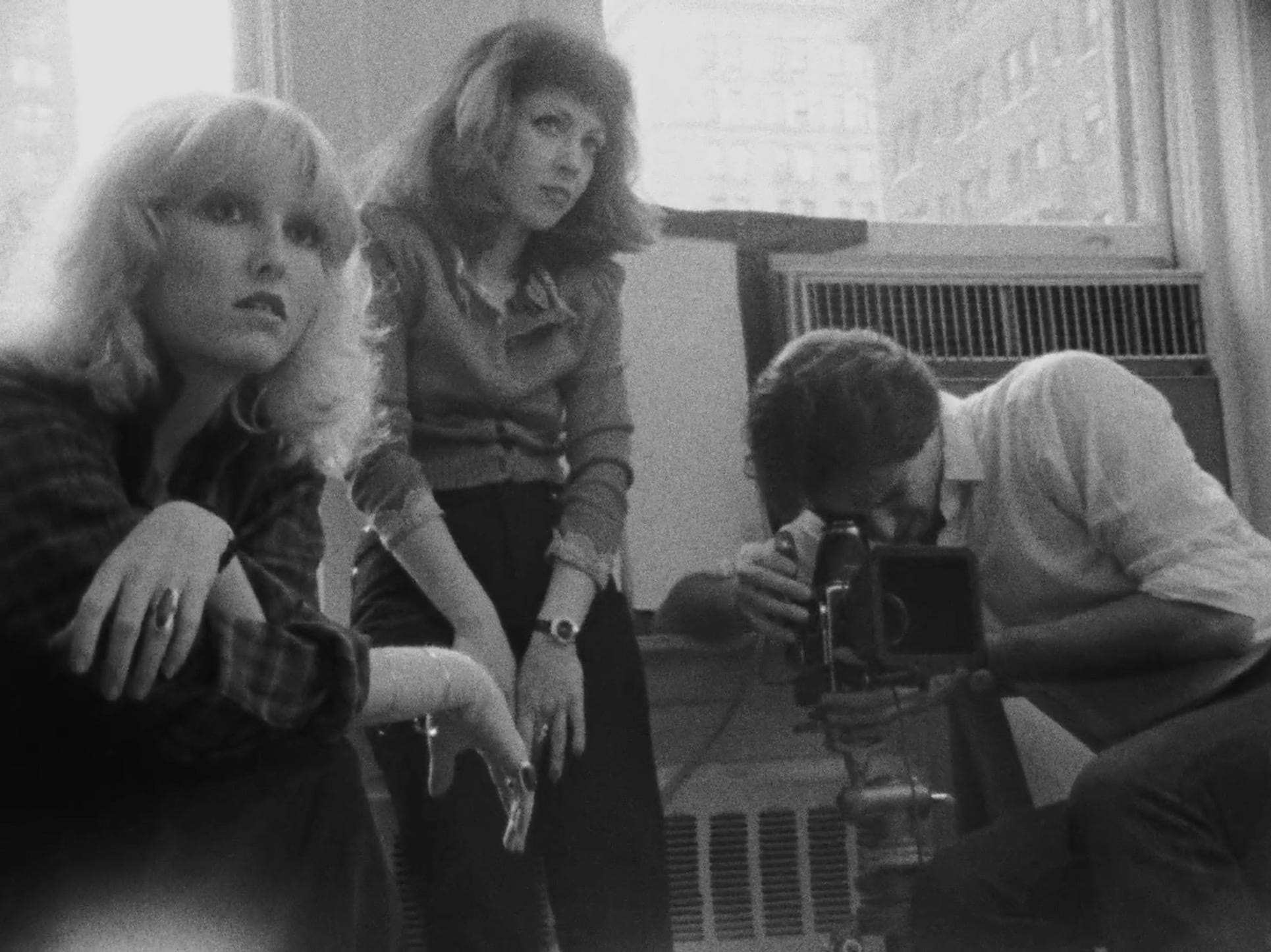
Now streaming on MUBI, the late Frederick Wiseman’s Model (1980), offers something rarely – if ever – captured faithfully on film: a window onto the inner workings of the fashion industry through the bodies on which its images are constructed. A Wiseman film never goes out of date, and the broader questions around representation, capital and labour that thread through his work find a remarkable staging ground in the setting of the fashion industry; like an overexposed photograph, Model starkly reveals many of the concerns present in Wiseman from the beginning, and always.
I’ve always loved the first moments of putting on a Wiseman – something I started doing, primarily, in the lockdowns of a few years back and all the time that freed up for watching four-hour-plus documentaries at home. And when it comes to Model, the initiated will notice an immediate difference between this and the forty-seven other feature documentaries by the late director, made from the 1960s to the 2020s. Usually, after the street traffic or passing figures of the film’s first beats – scenes that are usually unrelated to the topic at hand, that often feel like a city waking up – you are swiftly and explicitly grounded in the world of the institution Wiseman is about to explore through the title treatment: HIGH SCHOOL; HOSPITAL; JUVENILE COURT; WELFARE; ZOO; CITY HALL. Among these titles, Model stands out. A model, after all, isn’t an institution. It’s not really a person either; a type, perhaps. And though it is certainly labour – as Wiseman’s approach gently illuminates in this 130 minute examination – there are many others out there who wouldn’t call it a real job.
The idiosyncrasy of this work is articulated by one of the “stars” of Model, in a scene in which he gives an interview to a journalist (although Wiseman would simply never have dreamt of using a device as immediate as a talking head, tricks like this are what allows someone to explain the “point” of the documentary). The speaker is Zoltan “Zoli” Rendessy, the founder of the Zoli model agency that Wiseman films here over the course of a few weeks in 1979 (the agency started the careers of Pat Cleveland and Renée Russo, among others). Zoli, who is witnessed in all his wry splendour in the doc, succinctly maps the trajectory of any boy or girl who walks through the doors of his agency: “between 2 and 5 percent” will join, “a good half” will be done in a couple months, and while the men may have a good 20 year career ahead of them, for women it’s much shorter. As he puts it, “you don’t have 45 years to make it, then retire, like other jobs.”
Clip from Frederick Wiseman’s film ‘Model’
Other than for a select few, this rings true today. And though it may seem like an obvious point to make about a modelling career, it’s one observation of Wiseman’s – along with the overlong shoots, ratty photographers, and the huge amounts of waiting and uncertainty that models encounter on a daily basis – that takes the air out of the audience’s pre-existing perceptions of what being a model might entail.
It’s ostensibly crazy that real humans will stand in front of a camera, made-up and dressed-up and frankly goddess-like, and a room full of people will glare at them and say: “It’s not working… it’s really not working.” And there are plenty of opportunities for such moments of mediation in Model, which is filled with scenes of models having their books judged by Zoli employees; shots that flip between photographs of the men and women, and their real self sitting in a chair; even, neatly, moments in which we see the final product, in still or moving image form, of commercial shoots that the viewer has watched.
Wiseman’s narrative, in Model, swings between the different scenarios any working model may find themselves in still today: beauty, accessories, womenswear still shoots or commercials, in the office for a meeting, backstage at a fashion show. (Until the latter location, after two hours of the film, we haven’t seen a group of models together having fun, which is also a choice of the director.) In Wiseman’s viewfinder, the model is simply always working. There are also plenty of the motifs of office culture we see elsewhere in his films to be found here, though here they are shot through with the specific language of fashion: people have meetings that end in disappointment; people bargain on the phone when we don’t know who is on the other end of the line. “22, tall and lean,” we hear them say. “Average, All-American, Beautiful.” A photographer tells the models: “Stop expressing yourself. Just pretend you’re in the window at Bloomingdale’s, okay?”
Clip from Frederick Wiseman’s film ‘Model’
While Wiseman became known at the beginning of his career for an unflinching lens on social injustices, it was not the point of his work: it’s just that, when you depict people’s daily experiences, it’s going to come up. “There are people who think if I don’t make a movie about how poor people are being taken advantage of by the system, it’s not a real Fred Wiseman movie,” he later stated. When it came to lensing all-American excess, the 1980s provided: Model is the first time Wiseman departs from society’s outer edges. It would be followed by films such as The Store, Aspen and Ballet, all of which return to moments of performance and laboured display. Across them runs a consistent idea: that glamour is constructed, an image produced through layers of mediation and held at a distance from the reality it depends on.
Another reason the modelling industry is the ideal Wiseman topic is because it is an ecosystem operating on the act – and art – of repetition. Rather than resting his gaze on the fantasy of extravagant set design, Wiseman zones in on faces and bodies, lighting upon the series of repetitive movements that modelling actually involves. A man advertising cufflinks is told to raise his wrist right to his face, a completely unnatural pose that would never happen in real life; a group of sportswear models are instructed to shout “Yay!” three times over in a small studio; a model is shot from the waist down only, instructed to lift her leg to marker points by the photographer that will give the appearance of ten women’s legs for the final hosiery advertisement. By the 57th take of this, the model is still cheery. But she’s definitely tired as all hell. (The scene made me think of another layer of artifice I heard once: that the legs modelling hosiery online are often actually men’s, because their legs are more toned in the way women have been told theirs ought to be.)
Clip from Frederick Wiseman’s film ‘Model’
Wiseman obviously liked hanging out with the models: he made an experimental fiction feature with one of them, Seraphita, the very next year. Even amongst tense scenes, there’s an ease to the network depicted that feels like it overlaps naturally with a certain kind of New York social life at this time: a photographer jokes around with his male model; a make-up artist does an impromptu runway walk backstage at the Oscar de la Renta fashion show, putting on a skirt. There are no club scenes, but you imagine everyone bumps into each other at Studio 54 most weeks. This is much how fashion operates now, in its lived-in reality: coming up at the same time; working with your friends; a sense of peer-to-peer intermeshing both comforting and claustrophobic.
Of course, knowing that Model is playing out in 1979 in New York, one can’t help but feel a shadow. It’s not surprising, given the fashion and media ecosystem that it depicts, that people we meet in Wiseman’s documentary would be lost to Aids, but it struck me hard when I realised how many: Joe Macdonald, the handsome supermodel favourite of Andy Warhol’s (who also cameos here), and Zoltan Rendessy were both early victims to the virus. When he depicts those forgotten by society, Wiseman’s films often provoke the thought: “I wonder what happened to him?”; in Model, you think the same thing because they are at the energetic centre point of ground that will soon collapse. It renders the fixing of their bodies as magazine covers and campaign images all the more moving.
The point of Wiseman’s documentary-making is never exposure, and his lens has a basic empathy for everyone inside these systems: the down and out; the up and in; the disabled and able-bodied; here, in Model, the more beautiful and the less “beautiful”. There’s an overriding sense of people just leading their lives, even in Model. That said, the starkness of reality and unreality of the world of fashion modelling is, in the end, too tempting not to flash upon. Those are the least powerful moments of Model: cutting from models shooting a campaign to a homeless man sleeping on a park bench is about as subtle as a six-storey billboard. The cuts that work better, for me: when Wiseman gives us designer storefronts, window mannequins, campaign billboards, fabric importers, or towards the end, a scene of older seamstresses adjusting gowns at their sewing machines. Such moments, suggestive of the output of all this input, also make visible the real work of modelling – that is, not only that it can be tiresome, draining and dull, but that it is an essential cog in a system whose scale far exceeds the frame, shaping not only images but the economic life that depends on them.
Clip from Frederick Wiseman’s film ‘Model’
The documentary’s longest scene takes place during an on-location photoshoot for a hosiery brand. It could come with a trigger warning for anyone who has worked in fashion; I felt the instant sensation of rising tension, of time running out before the shot has been got (has a fashion shoot ever ended early?). It’s classic Wiseman: staying with his subjects and refusing to look away. Taking place on a classic Uptown street, the photographer grows frustrated with the female model, who is being asked to perform spontaneity in increasingly tyrannical conditions.
Wiseman has often argued that there is no such thing as reality in film, only “a series of choices.” He makes a choice here, too, and it speaks to his wider approach. A lesser filmmaker might rest on the model’s face: her increasing discomfort, her rising tears, maybe. But he doesn’t come closer to the girl at all. That’s just like Wiseman; his empathy slips in obliquely, like he intuits that she already has enough eyes on her.
The absurdity deepens as the day wears on: everyone is wearing fox stoles on a warm day; everyone is discussing whether to get an extra shot of the pantyhose before sunset with the hushed tones of surgeons at an operating table. Wiseman shows us not just the scene, but those watching it unfold – and we watch with them. Black American builder in a hard hat. A Japanese tourist. Old lady cleaners glimpsed through the window. A cluster of teenage girls, who are very pretty, and probably thinking: how glamorous, I could do that.