

What leaving the fashion capital reveals about building a slower, steadier career
The benefits and trade-offs of stepping outside the London circuit
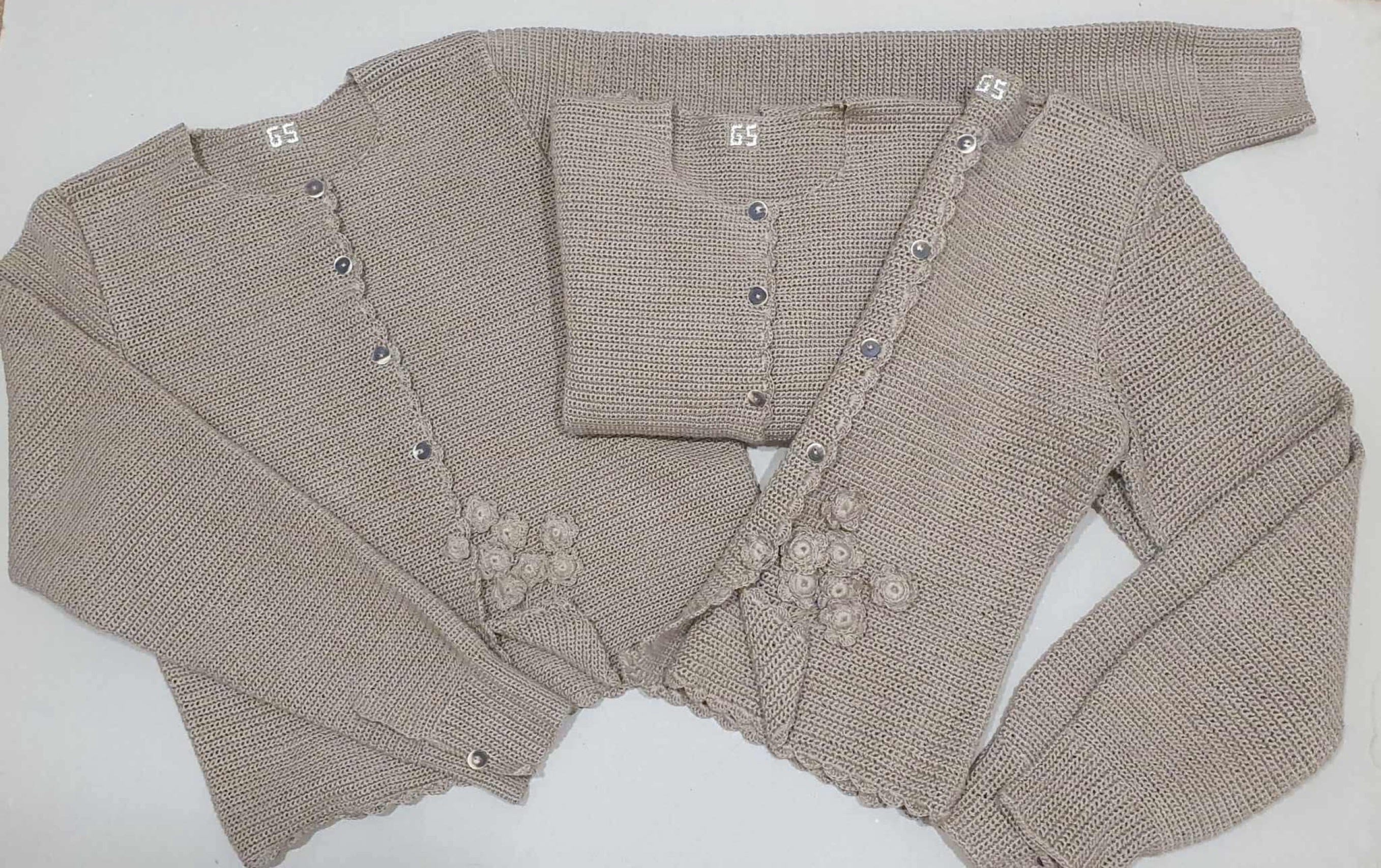
Lithuanian-born, Chicago-raised designer Gabriele Kim runs her eponymous label in what appears to be an unusually instinctive manner. For example, in an act often considered brand suicide, she changed its name from Gabriele Skucas to Gabriele Kim after getting married. It was, for her, a personal as well as professional decision. It felt, to her, “a little strange when I got married to not change my name to be the brand that I am today.” It’s this intimacy that has her stockists coming back each season.
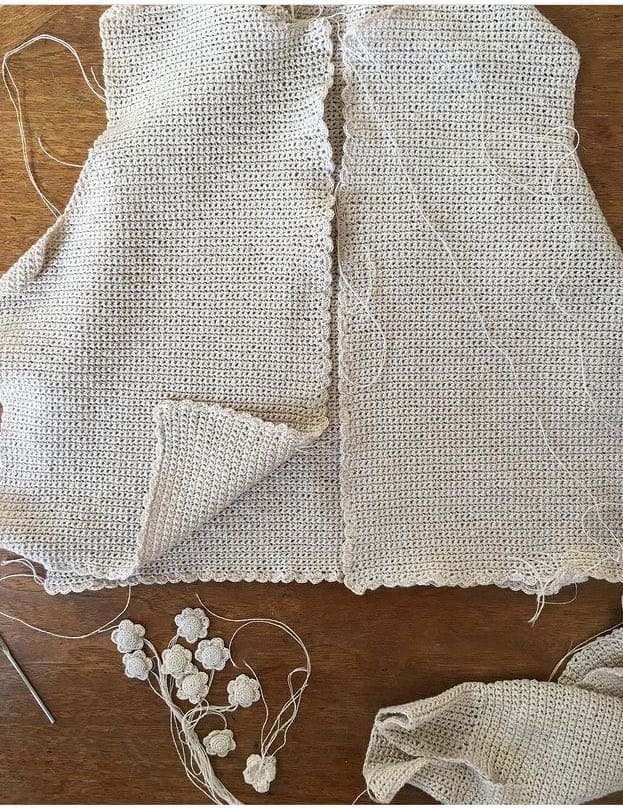
Her brand’s beginnings were just as unusual. After co-winning the L’Oreal Prize with Stefan Cooke and winning high praise from the industry, instead of pursuing a label in London, she decided to move back to Chicago in order to run her brand slowly and thoughtfully. Forgoing traditional production methods, Kim instead employs a team of hand-knitters in Lithuania to bring her exquisitely crafted crochet and knitted pieces to life. In an industry where production relationships usually extend to factory owners, her relationship with the women who make her clothes defies the norm: she knows them all personally and is aware of their strengths, tailoring each garment she designs to their skillset.
Said buyers come from Dover Street Market, Egg Trading and Casimir Pulaskiday, with whom she’s been working since graduating from Saint Martins in 2019, as well as a long list of stores across Seoul, Shanghai, Tokyo, London, Athens, LA, and New York. For the next in our series on slow, sustainable labels that have found a way of working that works (see our first and second editions here and here), we sat down with Gabriele Kim to find out how she does it.
Could you describe Gabrielle Kim, the label?
Yes, it's mainly handmade. Prototypes are all done by me. And we have, at any given time, based on how many orders I have, 10 to 15 handmakers in Lithuania – women – making the garments. We use natural fibres, just because that's what I prefer. I'm not against, you know, a shiny synthetic, but it’s mostly natural fibres, ranging from Lithuanian linen to merino wool and, most recently, solid 14 karat gold chain, which is definitely the most expensive yarn I've ever worked with! Maybe I say this every time I make something new, but it's my favorite thing I've ever made.
How do you source these materials?
I produce a new line every six months – that’s my timeline for seasons. So I order a bulk amount of yarn that I think I like the colours of, I'm inspired by the textures of. Often, they're very natural colours. There's a linen house I work with in Lithuania that is really wonderful. There's so much linen production in Lithuania, and they're able to make colours from scratch as well. If I request something between a blue and a grey (I'm using this blue-grey this season), they're able to do that. They're not a huge company, so they don't need a minimum order from me.